

THC Doctor in San Antonio for the Texas Compassionate Use Program
AIM Primary Care offers compassionate, personalized cannabis care for patients exploring low-THC cannabis through the Texas Compassionate Use Program. Our experienced team, led by Dr. Sujatha Gerineni, MD, guides you through the process, from initial consultation and physician evaluation to ongoing support.
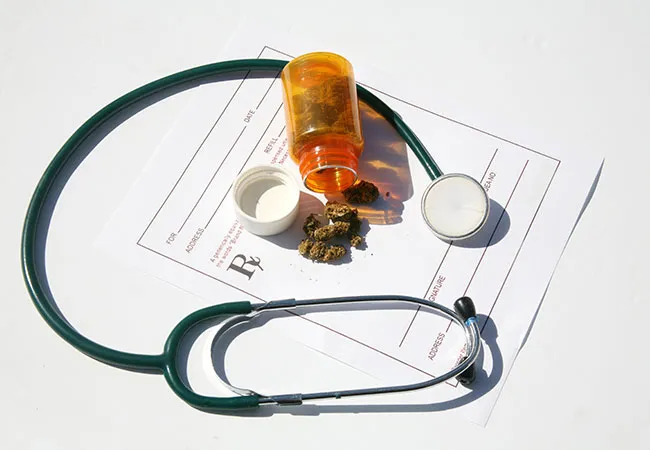

Medical Cannabis Care Through the Texas Compassionate Use Program
The Texas Compassionate Use Program allows qualified patients to receive a prescription for low-THC cannabis for certain medical conditions. A registered physician reviews your diagnosis and, when appropriate, prescribes low-THC cannabis through the Compassionate Use Registry of Texas (CURT), the state system connecting physicians, patients, and licensed dispensing organizations.
At AIM Primary Care, our team handles your evaluation and registry submission, and helps you understand what a medical cannabis prescription means for your specific condition.

Medical Marijuana Doctors in San Antonio
AIM Primary Care is led by Dr. Sujatha Gerineni, MD, a board-certified internal medicine physician who participates in the Texas Compassionate Use Program. We evaluate patients and, when appropriate, prescribes low-THC cannabis treatment. Our care team supports you throughout the process, from scheduling and medical evaluation through follow-up care.
Whether you're visiting for an initial evaluation or follow-up care, our team reviews your medical history as part of your ongoing care.
Who Qualifies for the Texas Compassionate Use Program?
Texas law identifies specific medical conditions for which low-THC cannabis may be prescribed. If you have one of these conditions, a consultation with us can help determine whether you meet the program's requirements.
Epilepsy & Seizure Disorders
Recurring or treatment-resistant seizures were among the program's original qualifying conditions.
Multiple Sclerosis & Spasticity
Cannabis treatment can be considered for muscle stiffness and discomfort related to MS.
ALS & Neurodegenerative Disease
Amyotrophic lateral sclerosis and other incurable neurodegenerative diagnoses qualify.
Autism
Patients with a documented autism spectrum diagnosis can be evaluated for eligibility.
Cancer
Most forms and stages of cancer qualify under current Texas law.
PTSD
Post-traumatic stress disorder is a qualifying condition, reflecting the program's expansion to support veterans and trauma survivors.
Chronic Pain
Continuous or intermittent severe pain lasting more than 90 days.
Other Qualifying Conditions
Traumatic brain injury, Crohn's disease, and terminal or hospice-qualifying illness were also added in the 2025 expansion.
Having a listed condition doesn't guarantee eligibility. Texas law also requires permanent Texas residency, and a physician still has to determine that low-THC cannabis is appropriate for you individually. A consultation with us is the most reliable way to confirm where you stand.

Medical Marijuana in San Antonio: How the Texas Program Works
Once our physicians determine that low-THC cannabis is appropriate and prescribe it, the prescription is entered into the Compassionate Use Registry of Texas (CURT). From there:
- Your prescription is valid for one year, with up to four 90-day refills before a follow-up evaluation is needed.
- You fill it through a state-licensed dispensing organization, a business the Texas Department of Public Safety authorizes to grow, process, and dispense low-THC cannabis.
- Low-THC cannabis comes in several forms, including oils, tinctures, patches, lotions, and inhalers. Smoking remains prohibited under state law.
There's no separate card to apply for, and you don't register yourself in CURT. We enter your prescription; the dispensing organization then verifies it against your ID before filling it.
Medical Cannabis Consultation: What to Expect
A Compassionate Use Program evaluation at AIM Primary Care follows four steps, start to finish.
Medical Evaluation
A review of your diagnosis, medical history, and treatments you've already tried.
Eligibility Assessment
We check your diagnosis against the state's qualifying conditions and confirm residency and documentation requirements.
Physician Evaluation & Prescription
If you qualify, we write your prescription and walk you through dosing and product options.
Compassionate Use Registry of Texas
We enter your prescription into CURT, which dispensing organizations check to verify it before filling.
Why Choose AIM Primary Care for Cannabis Care?
Compassionate Use Program Physician
Our team participates in the Texas Compassionate Use Program and evaluates patients for whom low-THC cannabis may be appropriate.
One Doctor, Full Picture
Your medical history and current treatment are considered as part of the physician's evaluation, helping place low-THC cannabis treatment in the context of your overall care.
Two San Antonio Locations
Walkers Way and City Base West are both open for cannabis evaluations, walk-in or scheduled.
Confidential Care
Your evaluation, diagnosis, and prescription details are handled with strict confidentiality and HIPAA-compliant care.
We Accept Most Health Insurance
AIM Primary Care works with most major health insurance plans. Coverage for a Compassionate Use Program evaluation can vary by plan, so give us a call and we'll confirm your benefits and any out-of-pocket cost before you come in.






What Our Patients Say About Us
Our patients' health and wellness are our top priority. Here's what they've said about their experience with AIM Primary Care.
Find the Best THC Doctor Near You
When you're looking for a THC doctor near you, convenience matters. With two locations serving San Antonio and nearby communities, AIM Primary Care makes it easy for eligible patients to schedule a Compassionate Use Program evaluation.

Sat: Announcing Soon!
Sun: Closed
Sat: Closed
Sun: Closed

Frequently Asked Questions About Medical Cannabis in Texas
A physician participating in the Texas Compassionate Use Program evaluates your medical history and diagnosis, determines whether you meet the program's requirements, and, when appropriate, prescribes low-THC cannabis through the Compassionate Use Registry of Texas (CURT).
Dr. Sujatha Gerineni participates in the Texas Compassionate Use Program and evaluates patients at AIM Primary Care's two San Antonio locations, Walkers Way and City Base West.
You must generally be a permanent Texas resident and have a qualifying medical condition recognized by the Texas Compassionate Use Program. A qualified physician must also determine that the medical use of low-THC cannabis is reasonable in light of the potential benefit.
DPS identifies permanent Texas residency, an approved condition, and the qualified physician's benefit-versus-risk determination as the core eligibility requirements.
Yes. Texas is one of the only states where a physician directly prescribes low-THC cannabis, rather than issuing a recommendation for a separate card program.
No. Texas doesn't issue a physical card, and you don't register yourself. Your physician enters your prescription directly into the Compassionate Use Registry of Texas, and the dispensing organization verifies it against your ID.
CURT is the Compassionate Use Registry of Texas, a secure state system administered by the Texas Department of Public Safety. Participating physicians use CURT to enter prescriptions for eligible patients, and licensed dispensing organizations use the system to verify prescriptions before dispensing low-THC cannabis.
DPS describes CURT as the system physicians use to prescribe low-THC cannabis and confirms that patients do not register themselves.
Qualifying conditions under the Texas Compassionate Use Program include epilepsy, seizure disorders, multiple sclerosis, spasticity, ALS, autism, cancer, PTSD, incurable neurodegenerative diseases, Crohn's disease or other inflammatory bowel disease, conditions that cause chronic pain, traumatic brain injury, and terminal illness or conditions for which a patient is receiving hospice or palliative care. Eligibility is determined by a qualified physician based on the patient's individual circumstances and the requirements of Texas law.
This reflects the current condition list published by the Texas Department of Public Safety.
Take the Next Step Toward Relief
Want to find out whether low-THC cannabis may be appropriate for your condition? Schedule a Compassionate Use Program consultation with AIM Primary Care today.

The Texas Compassionate Use Program is administered by the Texas Department of Public Safety and governed by Texas law, which is subject to change. Information on this page is provided for general reference and does not guarantee eligibility, prescribing, insurance coverage, or treatment outcomes. Eligibility and treatment decisions are made individually by a qualified physician.